



 0 Comments

Pigmentation is a very common problem in India because of the extreme sun, acne, hormonal imbalance, pollution, and heat. Almost everyone starts doing random home experiments with any readily available home remedy in the hope of getting a quick cure, and this is where the main mistake occurs: if the home remedy is wrong, the pigmentation tends to worsen.
The bottom line is, some sorts of pigmentation will need some sort of treatments/approaches. Home made skin lightning is to prevent dark spots, tans, acne, pigmentations, and discoloration on your skin by applying some proven ingredients, applying sunscreen, exfoliating, and having a proper skin care regime.
The treatment at home requires further precautions when it is Indian skin, as skin with more melanin would react more intensely to skin irritation/inflammation/U V rays. We’ll also be talking about effective home treatments, skin care regimes inspired by a dermatologist and the scientific basis of different ingredients, and the most common mistakes people tend to make for rapid & healthy resolution of hyperpigmentation.
Understand Your Type of Pigmentation
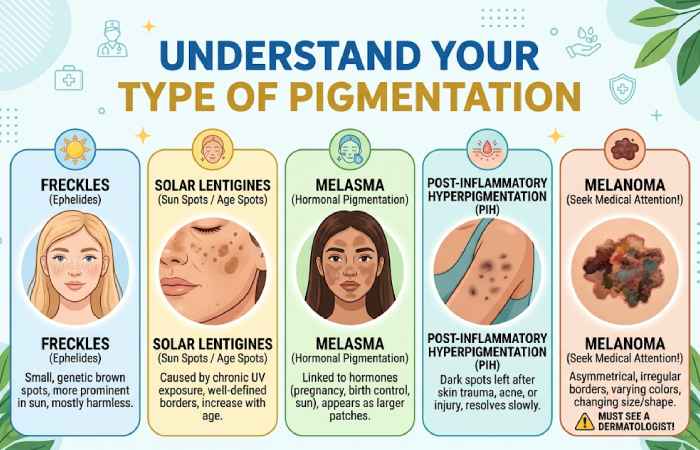
The biggest hurdle for the home-based correction of hyperpigmentation is the idea that all brown marks are the same and will be fixed by the same method.
There are various kinds of pigmentation, all of which need specific skin treatments:
Common Types of Pigmentation
| Pigmentation Type | Main Cause | Appearance |
| Post-Inflammatory Hyperpigmentation (PIH) | Break out or skin injury | Pigmentation after inflammation |
| Melasma | Hormones and sun exposure | Symmetric brown patches |
| Sun Pigmentation | Damage by UV rays | Freckles & Uneven pigment. |
| Tanning | Heat and sun causing excess melanin production | Increased pigment on skin. |
| Freckles | Inheritance | Tiny speckles. |
The identification is critical because:
- Incorrect treatment results in slow healing
- Excessive treatment may result in more irritation
- The use of stronger treatments may result in further darkening
Post-Inflammatory Hyperpigmentation (PIH)
PIH is frequently encountered in Indian skin types since melanin-rich skin produces more pigmentation following inflammation.
Common causes include:
- acne
- skin picking
- waxing irritation
- burns
- allergic reactions
These marks usually appear brown, grey or dark red after the original inflammation heals.
Melasma
Melasma is deeper and more stubborn pigmentation usually triggered by:
- hormones
- pregnancy
- sun exposure
- heat
- genetics
It often appears as symmetrical patches on:
- cheeks
- forehead
- upper lip
- jawline
Compared to acne scars, the lightening of melasma typically takes longer to appear.
Sun Pigmentation
Too much UV exposure will stimulate more melanin production, and over the years may result in unequal skin pigmentation.
Sunscreen becomes all the more critical in Indian climate conditions where UV intensity will stay high throughout the year.
Tanning and Uneven Skin Tone
Most prevalent pigmentation in India is tanning. Heat and humidity along with outdoor exposure cause:
- uneven tone
- dullness
- patchy darkening
- forehead tanning
- pigmentation around the mouth
Freckles and Genetic Pigmentation
The cause of freckles are most often genetic, and may not clear entirely through home treatment. Nevertheless, the prevention of them deepening color by effective sun protection may be possible.
Why Pigmentation Is Common in Indian Skin
Indian skin, by its very nature, has more reactive active melanin than lighter skins. The additional active melanin, whilst offers natural sun protection, increases the skin’s responsiveness to post inflammatory and UV generated pigmentation.
Why Indian Skin Gets Pigmentation Easily
| Trigger | Impact on Skin |
| Strong UV Exposure | Stimulates Melanin production |
| Pollution | Induces oxidative stress |
| Heat and Humidity | Initiates inflammatory response |
| Acne | Hyper-pigmentation is long lasting |
| Harsh DIY Remedies | Damages the stratum corneum (skin barrier) |
| Over-Exfoliation | Potentially hyper-pigments the skin more |
Brown skin is susceptible to developing post-inflammatory pigmentation as well after an insult.
Hence, it is essential to take great care with it.
Can Pigmentation Really Be Treated at Home?
Yes a lot of these pigmentation types can get better with good home treatment and a consistent skincare routine. It’s important to be realistic though;
‘mild’ pigmentation will respond better than “deep” hormonal pigmentation.
Realistic Treatment Timelines
| Pigmentation Type | Estimated Timeline |
| Acne Marks | 4–8 weeks |
| Mild Tanning | 2–6 weeks |
| Uneven Tone | 6–10 weeks |
| Melasma | Several months |
| Deep Pigmentation | May require dermatologist |
Pigmentation fades gradually because skin renewal takes time.
Quick-fix products promising “instant whitening” often damage the skin barrier instead of helping long term.
Best Ingredients for Pigmentation Treatment at Home
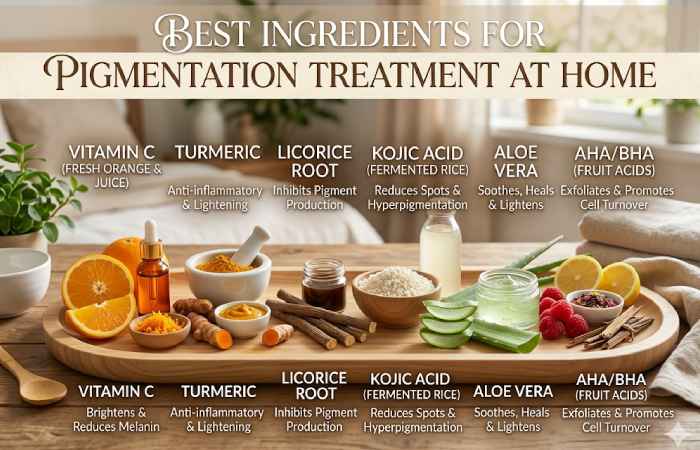
Smart home treatment rituals use evidence based ingredients and avoid random homemade recipes.
Niacinamide
Niacinamide is one of the safest and most novice-friendly ingredient to be used for Indian skin.
Benefits of Niacinamide
| Benefit | Why It Helps |
| Reduces Pigment Transfer | Helps fade marks gradually |
| Strengthens Skin Barrier | Reduces irritation |
| Controls Oil | Helpful for acne-prone skin |
| Improves Uneven Tone | Supports balanced complexion |
Best for:
- acne marks
- oily skin
- uneven tone
- beginners
Vitamin C
A powerful antioxidant and brilliant contributor to illuminating skin while working with your defense against external stressors. Vitamin C is the main ingredient.
Vitamin C Benefits
| Benefit | Skin Support |
| Brightening | Improves dullness |
| Antioxidant Protection | Supports skin against pollution |
| Sun Damage Support | Helps uneven pigmentation |
| Glow Enhancement | Improves radiance |
Best for:
- dull pigmentation
- sun damage
- tired-looking skin
Azelaic Acid
For Indian skin Azelaic acid is best to reduce acne and pigmentation both.
Why Azelaic Acid Is Popular
| Benefit | Why It Matters |
| Acne Support | Helps reduce breakouts |
| Pigmentation Reduction | Targets dark marks |
| Redness Control | Gentle compared to strong acids |
| Melasma Support | Often dermatologist recommended |
Best for:
- acne-prone skin
- post-acne marks
- sensitive skin
Alpha Arbutin
Alpha arbutin is a slower but gentle pigmentation ingredient.
It works best with:
- sunscreen
- niacinamide
- hydration-focused routines
Best for:
- beginners
- uneven tone
- mild pigmentation
Tranexamic Acid
The use of Tranexamic acid has become extensive and has also incorporated its way into the regimes, targeting pigmentation and melasma.
Tranexamic Acid Benefits
| Benefit | Skin Concern |
| Melasma Support | Helps stubborn pigmentation |
| Uneven Tone | Improves patchy areas |
| Gentle Formula | Suitable for regular use |
This ingredient is becoming highly relevant in dermatologist-guided pigmentation routines.
Kojic Acid
Kojic acid can help pigmentation but should be used carefully.
Overuse may cause:
- irritation
- sensitivity
- barrier damage
Indian skin responds rather aggressively to excessive exfoliation so don’t overdo it.
Retinol
Skin renewal will occur from using Retinol and will help with pigmentation over time.
Beginner Retinol Tips
| Rule | Why It Matters |
| Start Slowly | Reduces irritation risk |
| Use at Night | Sun sensitivity increases |
| Moisturise Well | Supports barrier repair |
| Wear Sunscreen Daily | Prevents worsening pigmentation |
Best for:
- aging-related pigmentation
- acne marks
- uneven texture
Best Home Remedies for Pigmentation (That Are Actually Safe)
You can supplement your normal skin care regime with home remedies, but not to the exclusion of or over the top of the “normal.”
The goal should be soothing and supporting the skin barrier — not aggressively bleaching the skin.
Safe Home Remedies for Pigmentation
| Remedy | Possible Benefit |
| Aloe Vera | Cooling and hydration |
| Yogurt Masks | Gentle lactic acid support |
| Oatmeal | Calming irritation |
| Green Tea Compress | Antioxidant support |
| Honey | Moisture support |
Avoid dangerous DIY treatments such as:
- lemon directly on skin
- baking soda scrubs
- toothpaste
- harsh bleaching mixtures
They are highly likely to exacerbate pigmentation considerably.
Morning Routine for Pigmentation Treatment at Home
Consistency over complexity.
Simple Morning Routine
| Step | Product Type |
| Step 1 | Gentle cleanser |
| Step 2 | Vitamin C or niacinamide |
| Step 3 | Moisturiser |
| Step 4 | Sunscreen SPF 50 PA++++ |
Morning skincare should focus heavily on:
- protection
- hydration
- antioxidant support
Night Routine for Pigmentation Reduction
It focus more on skin repair and targeted treatment.
Night Routine Example
| Step | Product Type |
| Step 1 | Gentle cleanser |
| Step 2 | Pigmentation serum |
| Step 3 | Moisturiser |
| Step 4 | Retinol (2–3 nights weekly) |
Nighttime is ideal for:
- skin recovery
- active ingredients
- barrier repair
Sunscreen: The Most Important Step Most People Ignore
Plenty of people are willing to pay for serums but wouldn’t be caught dead wearing sunscreen.
Sunscreen should be a necessity to prevent the re-occurrence of pigmentation that can happen time and again after treatments.
Why Sunscreen Is Essential
| Benefit | Why It Matters |
| Prevents UV Damage | Stops new pigmentation |
| Protects Active Ingredients | Improves treatment effectiveness |
| Reduces Tanning | Maintains even tone |
| Prevents Pigmentation Return | Supports long-term results |
For Indian weather, look for:
- SPF 50
- PA++++
- lightweight formulas
- sweat-resistant textures
Reapplication is also important during outdoor exposure.
Mistakes That Make Pigmentation Worse
Some habits slow progress significantly.
Common Pigmentation Mistakes
| Mistake | Problem |
| Aggressive Scrubbing | Increases inflammation |
| Skipping Sunscreen | Causes recurring pigmentation |
| Mixing Too Many Acids | Damages skin barrier |
| Using Lemon Directly | Causes irritation |
| Over-Exfoliation | Triggers sensitivity |
| Random Steroid Creams | Can worsen skin damage |
In fact, Barrier damage is a major cause of permanent pigmentation.
Best Pigmentation Treatments for Different Skin Types
Every skin type is prone to particular ingredients:
Ingredient Guide by Skin Type
| Skin Type | Best Ingredients |
| Oily Skin | Niacinamide, Azelaic Acid |
| Dry Skin | Tranexamic Acid, Cermaides |
| Sensitive Skin | Alpha Arbutin |
| Acne-Prone Skin | Azelaic Acid |
| Combination Skin | Vitamin C and Niacinamide |
Ensure that the ingredients you choose will not be damaging to your skin, nor make it uneven.
Best Ingredient Combinations for Pigmentation
Properly layering the ingredients could yield safe results.
Effective Ingredient Pairings
| Combination | Why It Works |
| Niacinamide + Alpha Arbutin | Accessible Brightening |
| Vitamin C + Sunscreen | Antioxidant Properties |
| Azelaic Acid + Moisturiser | Gentle Mark/Acne Assistance |
| Tranexamic Acid + Ceramides | Hydration with a focus on Melasma |
Your skin has its limit for active ingredients in one application, so don’t over do it!
Can Indian Skin Over-Exfoliate Easily?
Yes. Indian skin willpigment more rapidly after injury because the melanin is quite sensitive to inflammation.
Over-exfoliation may cause:
- redness
- burning
- barrier damage
- worsening dark marks
Signs of Over-Exfoliation
| Symptom | Meaning |
| Burning Sensation | Barrier damage |
| Tightness | Moisture loss |
| Increased Sensitivity | Skin stress |
| New Pigmentation | Inflammation response |
Subtle habits work the best in the long run
Pigmentation After Acne: Why It Lasts Longer on Brown Skin
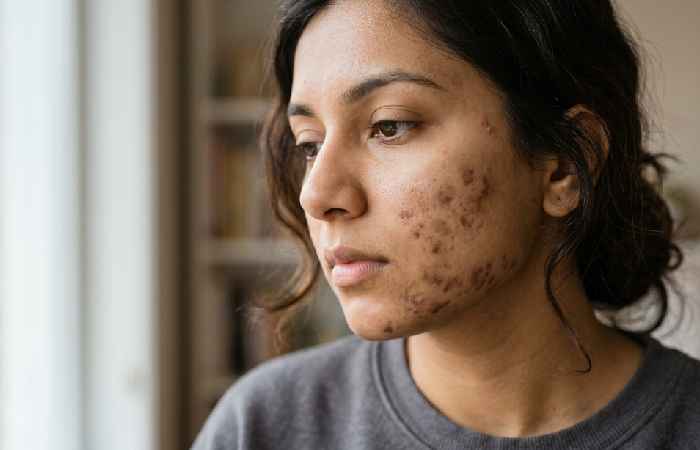
Post-acne pigmentation is much more common in darker skin tones with high levels of melanin.
Once the acne clears the skin will keep producing pigment in that area for a number of weeks or months, hence why acne scars can stay for so much longer than the initial breakout.
Why Acne Marks Persist
| Cause | Effect |
| Increased Melanin Activity | Darker marks |
| Picking Acne | More inflammation |
| Lack of Sunscreen | Darker healing |
| Barrier Damage | Slower recovery |
Reducing inflammation quickly will normally help speed recovery.
Weekly Pigmentation Routine Schedule
Using an active ingredient according to a set weekly program avoids using too much.
Example Weekly Routine
| Day | Focus |
| Monday | Niacinamide + sunscreen |
| Tuesday | Vitamin C routine |
| Wednesday | Barrier repair night |
| Thursday | Azelaic acid |
| Friday | Retinol night |
| Saturday | Hydration-focused routine |
| Sunday | Gentle recovery skincare |
Consistency matters more than using many products aggressively.
How Long Does Pigmentation Take to Fade?
Pigmentation improvement depends on:
- depth
- consistency
- sunscreen use
- skin type
- inflammation levels
Average Recovery Expectations
| Condition | Improvement Timeline |
| Mild Acne Marks | 1–2 months |
| Tanning | Few weeks |
| Uneven Tone | Several weeks |
| Melasma | Several months |
| Deep Pigmentation | Professional support may help |
Skin turnover cycles naturally take time.
When Home Treatment Is Not Enough
Some pigmentation concerns require professional evaluation.
See a Dermatologist If You Notice
| Situation | Reason |
| Rapidly Spreading Pigmentation | Needs evaluation |
| Painful Skin Changes | Could indicate irritation |
| Severe Melasma | Often requires stronger treatment |
| Persistent Dark Patches | Home care may not be enough |
Professional support may include:
- chemical peels
- prescription creams
- laser procedures
- hormonal evaluation
Pigmentation Treatment at Home vs Clinical Treatments
| Factor | Home Treatments | Clinical Treatments |
| Best For | Subtle pigmentation, sun tanning, nascent dark marks. | Hyperpigmentation (deeper melasma, persistent dark spots), post-inflammatory hyperpigmentation, acne scars |
| Common Methods | Aloe vera, vitamin C serum, niacinamide, turmeric, sunscreen. | Chemical Peels, laser toning, microneedling, medical grade prescriptions/creams |
| Average Cost (India) | 200–2,500 /month | 3000-30,000 per session |
| Total Treatment Cost | 500–10,000 (months). | 15,000-100,000 and above (depends on # of sessions) |
| Results Speed | Slow (2–6 months). | Fast (2-8 weeks for results) |
| Effectiveness | Can address only superficial pigmentation only. | Best for stubborn pigmentation including hormonal issues |
| Risk Level | Low (if mild products are used). | Moderate-High (if not properly administered or not handled by a dermatologist) |
| Side Effects | Irritated skin due to Lemon, DIY acids, over-exfoliation. | Redness, peeling, stinging/burning sensation, transient darkening |
| Maintenance Needed | Consistent use daily required | Periodic maintenance treatment plus daily sunscreen usage |
| Scientific Backing | Can be nullified in most DIY remedies | Strong dermatology evidence |
| Suitable for Indian Skin? | Yes, if safe actives like niacinamide & azelaic acid are used. | Possible but requires experienced dermatologist for darker skin tones |
| Downtime | Generally not present. | 1-7 days (depends on procedure) |
| Long-Term Results | Mild improvement. It may recur in due course. | More permanent correction with maintenance treatments |
| Recommended Products/Treatments | Vit C, Azelaic acid, Retinoids, SPF 50. | Q-Switch lasers, Chemical Peels, Microneedling, IPL |
| Dermatologist Needed? | Optional. | Strongly recommended |
Typical Clinical Treatment Pricing in India
| Clinical Treatment | Average Price per Session | Sessions Usually Needed | Resource |
| Chemical Peels | ₹2,000–₹10,000 | 3–6 | Labelle Guide on Pigmentation Treatments |
| Q-Switched Laser | ₹6,000–₹15,000 | 4–6 | Laser Treatment Pricing Reference |
| Pico Laser | ₹12,000–₹30,000 | 4–6 | Pico Laser Cost Guide |
| Microneedling | ₹3,000–₹8,000 | 3–5 | Hyperpigmentation Treatment Overview |
| Prescription Creams | ₹500–₹3,000 | Ongoing | Prescription Treatment Costs |
| Hyderabad Clinic Pricing | ₹2,950–₹12,000 | Varies | Oliva Pigmentation Treatment Hyderabad |
Best Lifestyle Habits to Prevent Pigmentation Naturally
A proper skin care regimen leads to long-term better control over pigmentation.
Lifestyle Habits for Better Skin
| Habit | Benefit |
| Good Sleep | Helps in healing. |
| Hydration | Keeps skin balanced. |
| Stress Control | It is an anti-inflammatory agent. |
| Balanced Diet | It aids to keep your skin healthy and nourished. |
| Daily Sunscreen | Prevents re-occurrence of pigment. |
| Gentle Skincare | It maintains skin barrier. |
General skin well being could also be assisted with yoga, relaxation and regular fluid intake.
Final thoughts
Home treatment for pigmentation works when you build on a consistent routine that has adequate protection and ingredients that have been scientifically proven to show results, rather than harsh DIY shortcuts that promise overnight transformations.